
AquaAccess

Problem
People trying to find clean water, public restrooms, and sanitation facilities nearby had no easy way to know where those facilities are, or if they're even safe or clean.

Research
The team interviewed 5 users around the core question of how people currently find water points and restrooms, then design and iterated based on users needs and pain points.

User Goals
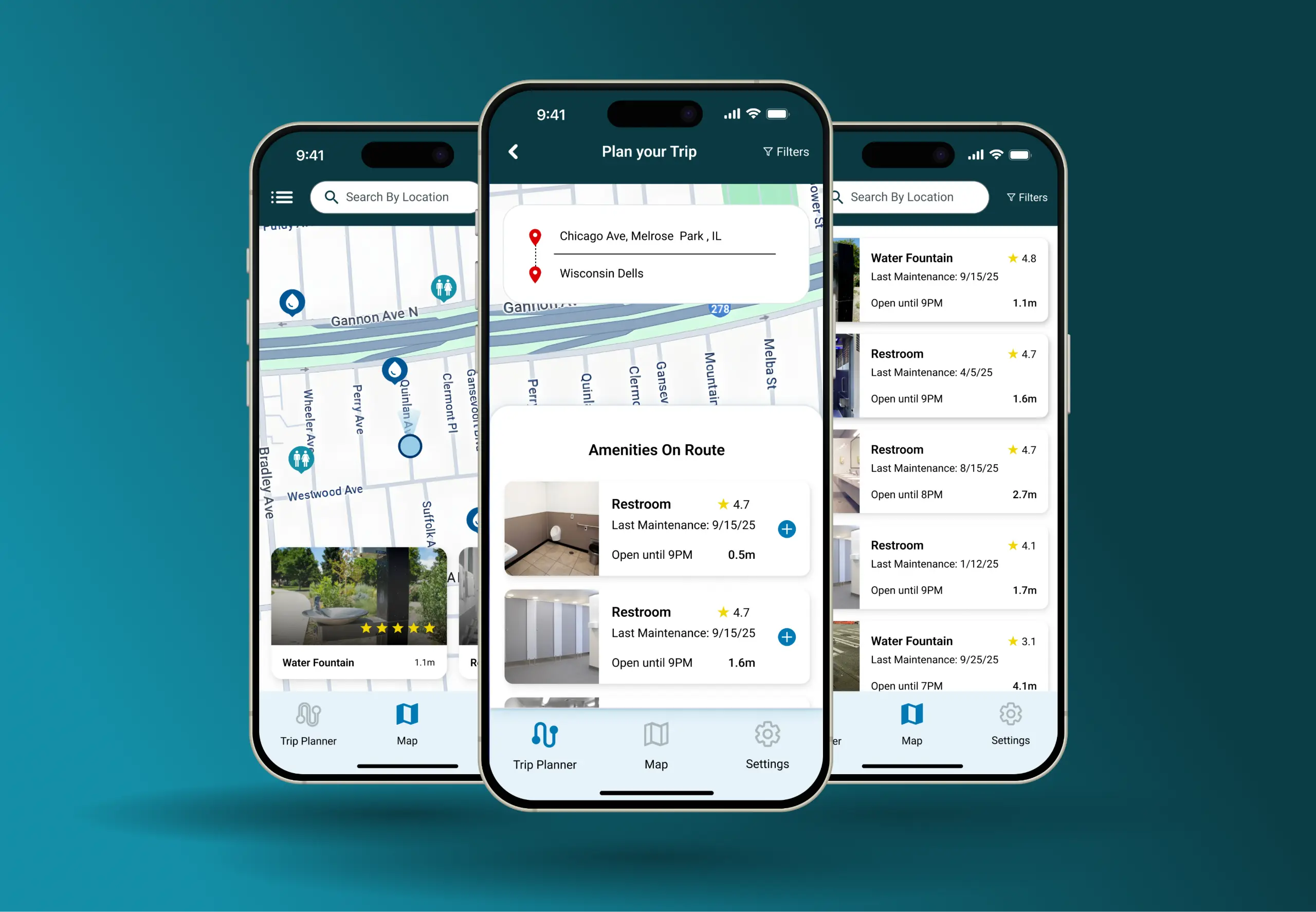
Locate Facilities: Help users quickly find nearby restrooms and water refill stations, wherever they are.
Build Trust Through Ratings: Show cleanliness and safety ratings with real photos, so users know what to expect before arriving.
Surface Facility Details: Provide clear information on amenities and accessibility options for every location.
Enable Community Reporting: Let users report maintenance issues and give feedback, encouraging accountability for local infrastructure.
Support Smart Filtering: Allow filtering and sorting by cleanliness, distance, and safety level to match different user needs.
Simplify Map Navigation: Use a color-coded map system so users can assess facility conditions at a glance.

Results
The Figma file was the actual class deliverable, a design-only project scoped around research, wireframes, and a hi-fi prototype. Turning it into a real, working app was never part of the assignment; that was done afterward, as a showcase of what I can build beyond the design phase. The app is a working single-page site built from the Figma specs, with a real map, filters, ratings, and live Mapillary street photos per location, built by Claude Code.
Because it was a self-driven showcase rather than a course requirement, the scope was set by what would best demonstrate real shipping ability: a live, data-backed, deployed product built using public data I had available, such as place locations, accessibility, open hours, and street view photos. But goals like live cleanliness and safety levels couldn't be built the same way, since there was no public data source for them. That data can only exist if users provide it themselves. Community reporting was never built, since it needs persistent storage and moderation that a static site doesn't have. As a result, the ratings and reviews that are shown are static mock data rather than something users can actually submit.
Contact Me
Have a question or a project in mind? Let’s chat!